Maintenance
Top 3 Reasons Your Semi Truck Air Brakes Are Losing Pressure
⚡ Quick Answer: Why are my semi-truck air brakes losing pressure?
A commercial semi-truck loses air brake pressure primarily due to pneumatic air system leaks (cracked rubber lines or worn gladhand seals), frozen moisture contamination blocking the valves during cold weather, or a failing air compressor or governor. If your dashboard air gauge drops below 60 PSI, pull over safely immediately before the emergency spring brakes automatically lock up.
Understanding the Danger of Commercial Air Pressure Drops
Unlike light consumer vehicles that rely on hydraulic fluid, heavy-duty commercial vehicles utilize compressed air to keep brake shoes pulled back from the drums. In a default state, massive mechanical springs are constantly trying to lock your wheels.
The compressed air generated by your truck works actively against these springs to let you roll smoothly down the highway. When your pneumatic lines lose pressure, the springs win-triggering a sudden, catastrophic wheel lockup. Recognizing the root causes of air loss before your low-pressure buzzer sounds is essential for fleet safety.
1. Pneumatic Air Line and Gladhand Leakage.
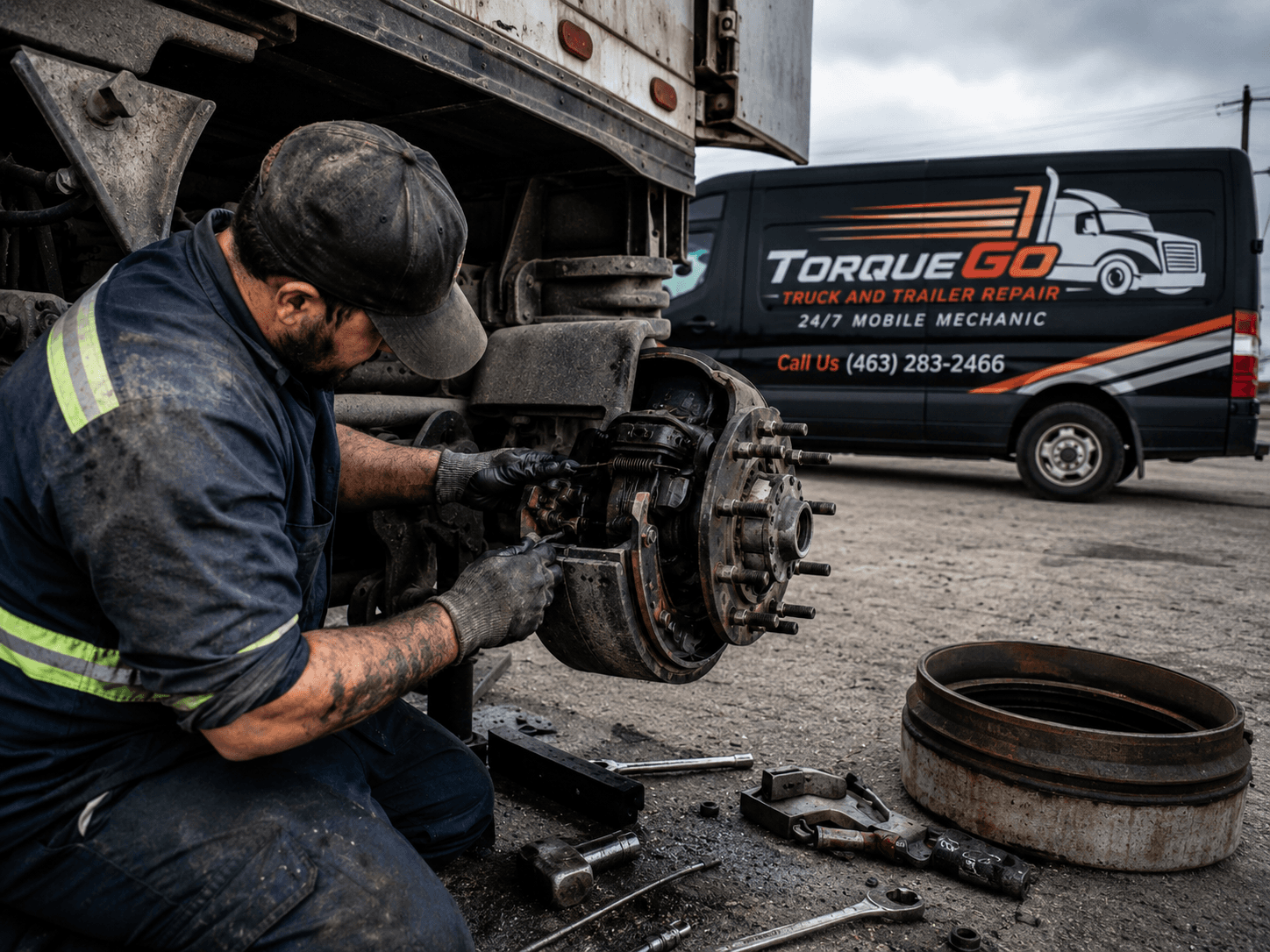
Pneumatic leaks are the leading cause of unexpected air pressure drops. Over hundreds of thousands of miles, the constant vibration of heavy-duty transport stretches connections, degrades rubber seals, and causes lines to rub against metal brackets.
When a leak develops, the system bleeds out pressure faster than the compressor can regenerate it. Minor line leaks can quickly escalate into full roadside DOT violations. If you notice a steady pressure drop during your pre-trip inspection, scheduling professional mobile brake diagnostics ensures bad lines are replaced before hitting the highway.
2. Moisture Contamination and Frozen Brake Lines
Water is the natural enemy of a heavy-duty pneumatic brake system. When air is compressed, it generates intense heat and condensation. Your truck's air dryer is responsible for filtering out this moisture.
If a fleet skips scheduled service intervals, the desiccant cartridge inside the air dryer becomes fully saturated with water and blow-by engine oil. During freezing Midwestern winters, that accumulated water turns to solid ice inside your brake lines, causing sticky valves or a total loss of brake control. Incorporating a strict preventative fleet maintenance protocol is the only way to avoid frozen lines.
3. Air Compressor Mechanical Failure or Governor Malfunction
The heart of your commercial braking system is the engine-driven air compressor. It draws in atmospheric air, pressurizes it up to roughly 120 PSI, and pumps it directly to your reservoirs.
A truck's air compressor relies on an external governor to manage its loading and unloading cycles. If the governor malfunctions, it won't tell the compressor to "cut in" when system pressure falls below 100 PSI. Alternatively, the compressor itself can suffer internal structural failures, like carbon build-up on the discharge valves or a blown head gasket allowing engine coolant to mix into the air system.
Need Fast Mobile Air Brake Repair in Central Indiana?
A drop in air pressure isn't a problem that can wait for the next truck stop. At TorqueGo Truck & Trailer Repair, our fully equipped service trucks bring advanced diesel diagnostics and emergency pneumatic parts straight to your location. Whether you are dealing with a frozen line on I-65 or a blown air chamber at a distribution hub, we offer rapid response times across our entire regional service network: